
Technologies

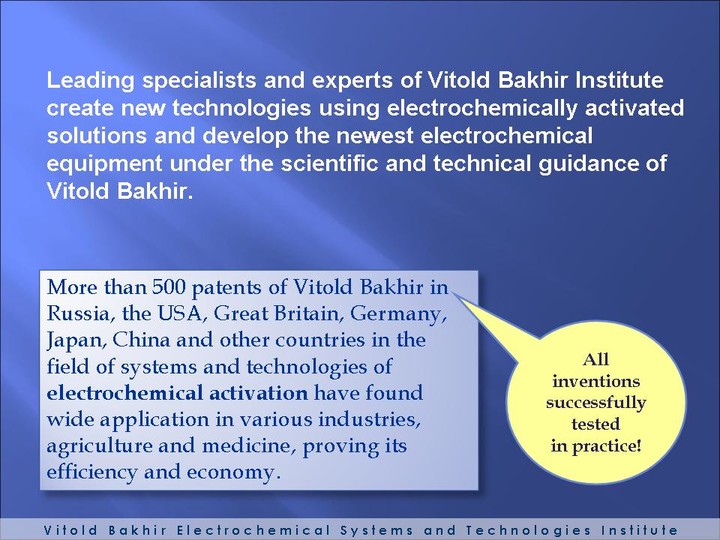
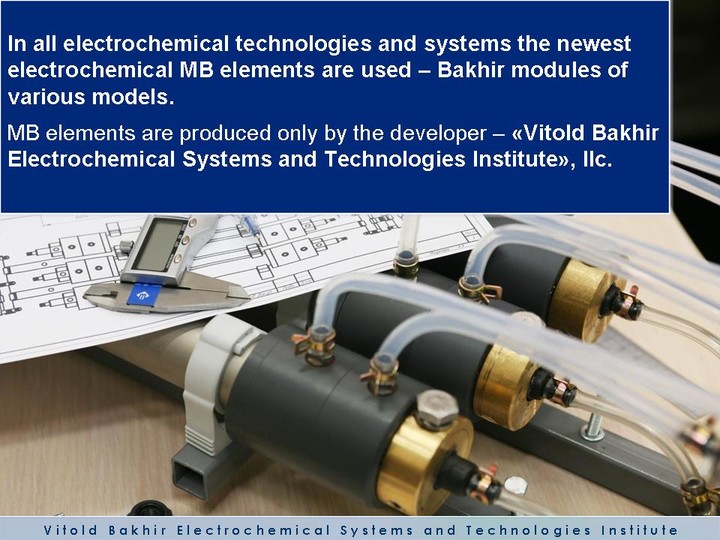
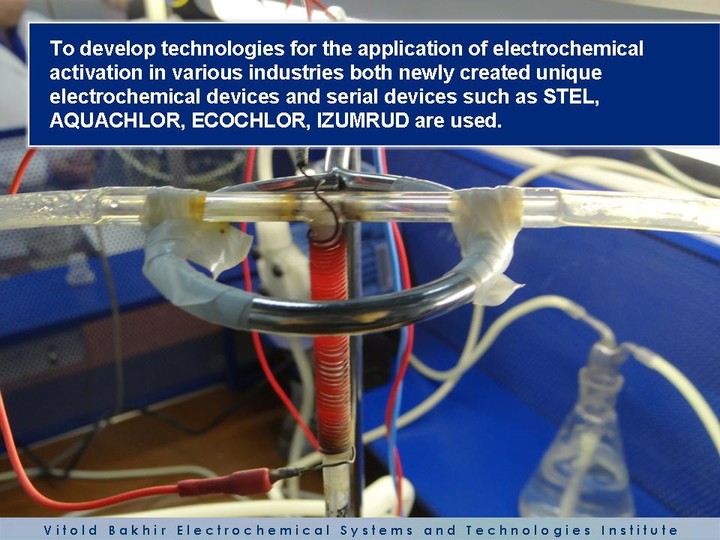
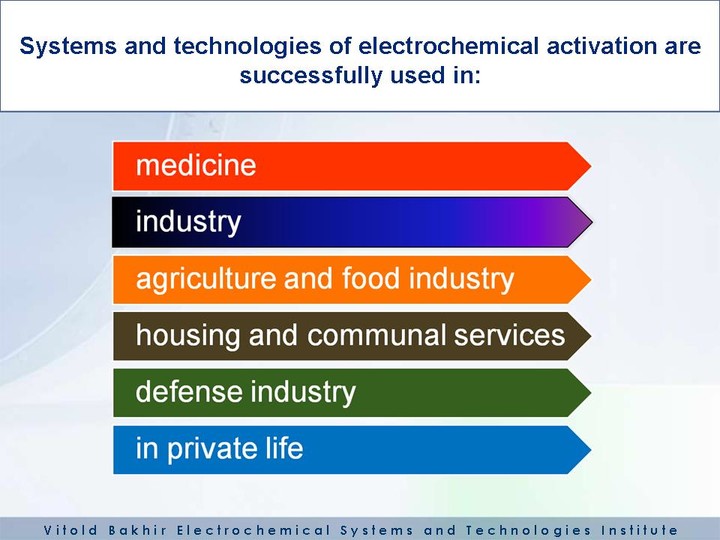

Some applications of electrochemical activation of water and aqueous solutions and specific technologies, which technical and economic efficiency have been proved experimentally (by laboratory tests or industrial approbation) or in the process of wide practical use:
- Medicine
- For home needs
- Water treatment and disinfection
- For Emergency Ministry and military personnel
- Veterinary medicine
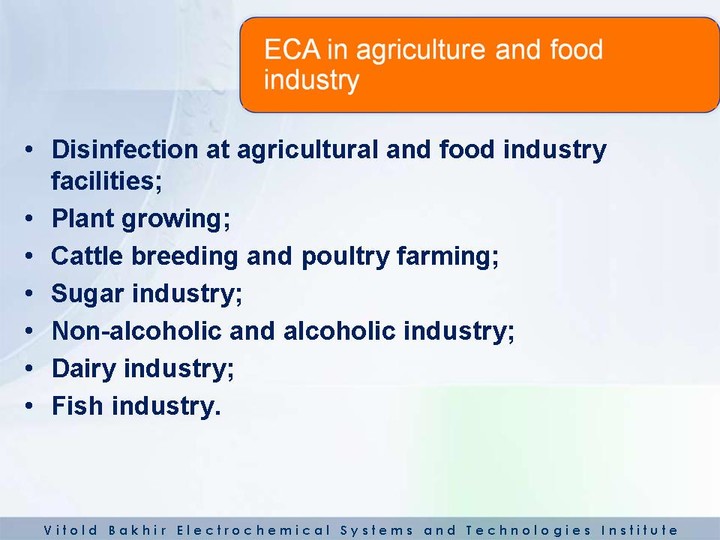
- Agriculture
- Food industry
- Municipal economy
- Industry
- Transport
Medicine:
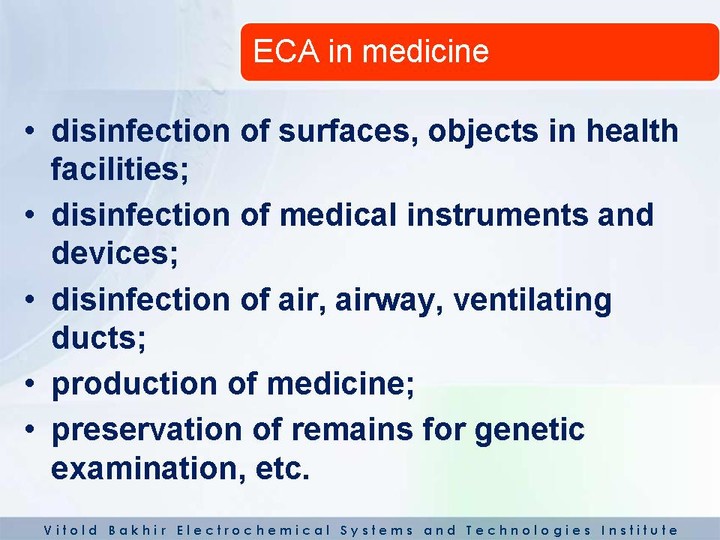
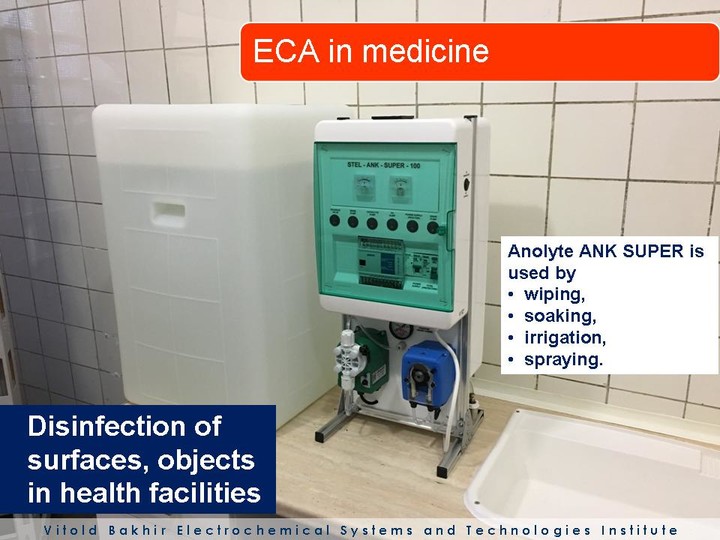
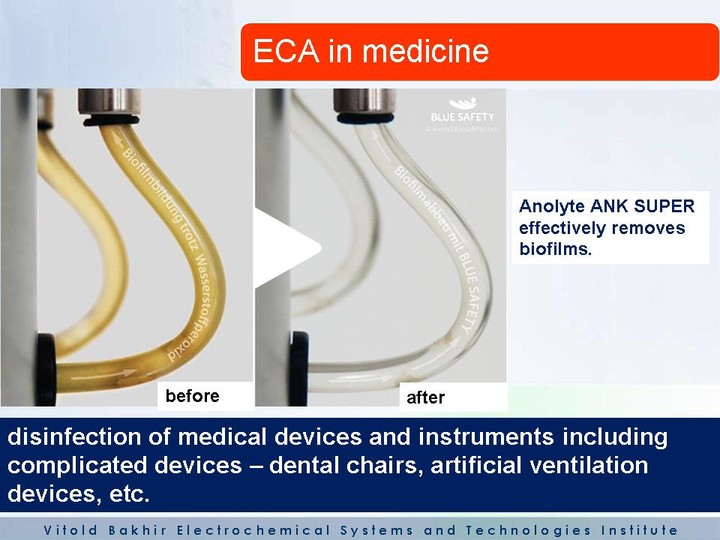
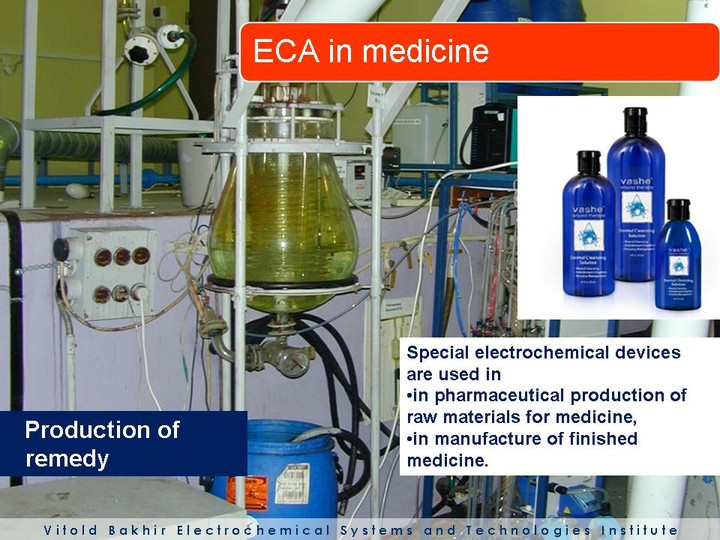
- Production of eco-friendly disinfecting and sterilizing solutions – anolytes, and detergent - catholytes, for disinfection, sterilization, pre-sterilization, cleaning; disinfection and sterilization of medical instruments, surfaces, cleaning equipment, utensils, etc.;
- Disinfection of hospital room at patient presence;
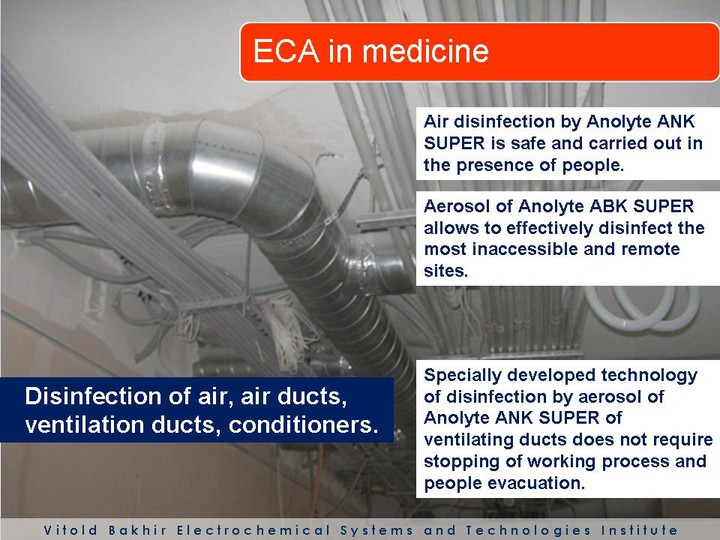
- Air disinfection;
- Medical waste disinfection;
- Anolyte as pharmaceutical for local and external use for treatment of injured and uninjured skin and mucous at different diseases in surgery, therapy, physiotherapy, dermatology, gynecology, urology, otolaryngology, etc. (treatment of burning injury, festering wound, trophic ulcers at diabetes, infections of various aetiology, etc.);
- Antiseptic, for example for treatment hands of surgeon, etc.;
- Sterile apyrogenic water;
- Production and application of anolyte in a field hygiene for supply with the needed volume of disinfectant for any inhabited locality or people in emergency cases due to placing of electrochemical devices of various capacity at mobile cars (ambulance car, military car);
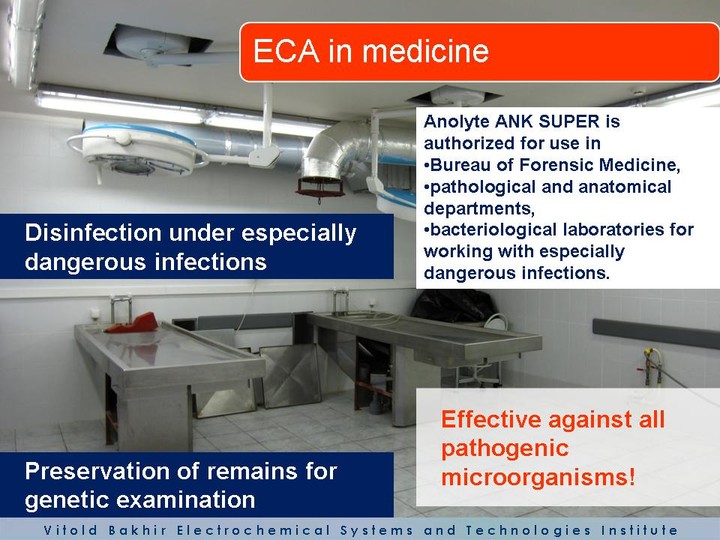
- Conservation and keeping of remains of the dead. In contrast to formaldehyde solution anolyte does not damage DNA structure, but stop protein-degrading enzyme effect save possibility of the following genetic examination. It is used in practice of forensic medical examination of Ministry of Defense RF from 2000 year in accordance with approved methodic recommendations.
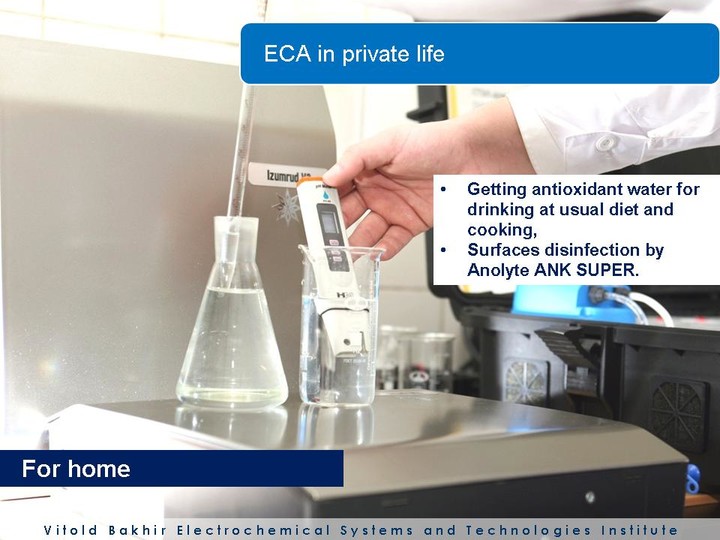
For home needs
- Getting of physiologically useful and epidemiologically safe antioxidant water from IZUMRUD-REDOX devices for drinking, cooking, cosmetic purpose, etc.;
- Watering of domestic animals with antioxidant water;
- Plants watering;
- Disinfection by anolyte of any surfaces and household goods as well as fruits, vegetables, meat and other food products with the purpose of shelf life increase.
Water treatment and disinfection
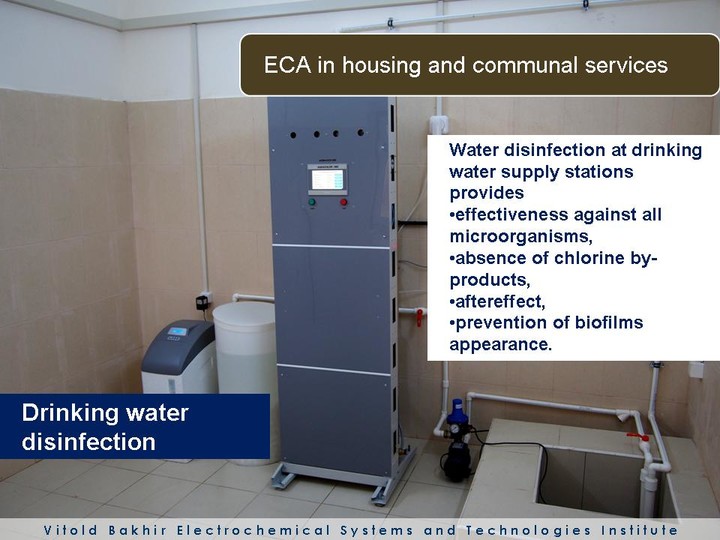
- Water disinfection at water treatment stations;
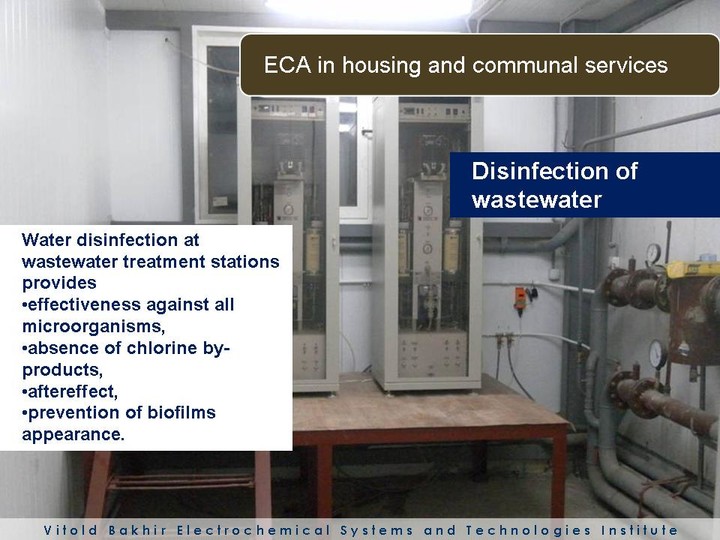
- Disinfection of sewage, industrial wastewater, agricultural wastewater;
- Disinfection of wastewater of hospitals;
- Disinfection and treatment of swimming pools water, spa, saunas, etc.;
- Disinfection of artificial and natural reservoirs in emergency cases;
- Disinfection of water in aquarium, terrariums;
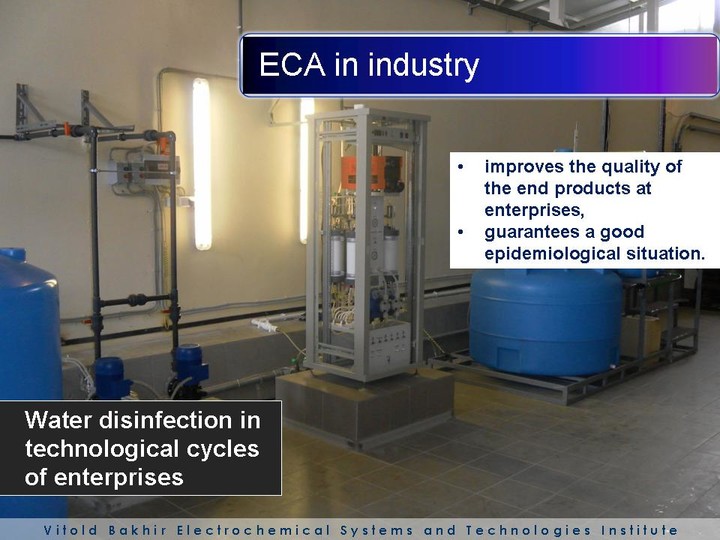
- Water disinfection in systems of recycling water supply of factories of energy economy, chemical and metal manufactures;
- Water disinfection in loop systems in technological water supply of industrial plants including plants of food industry;
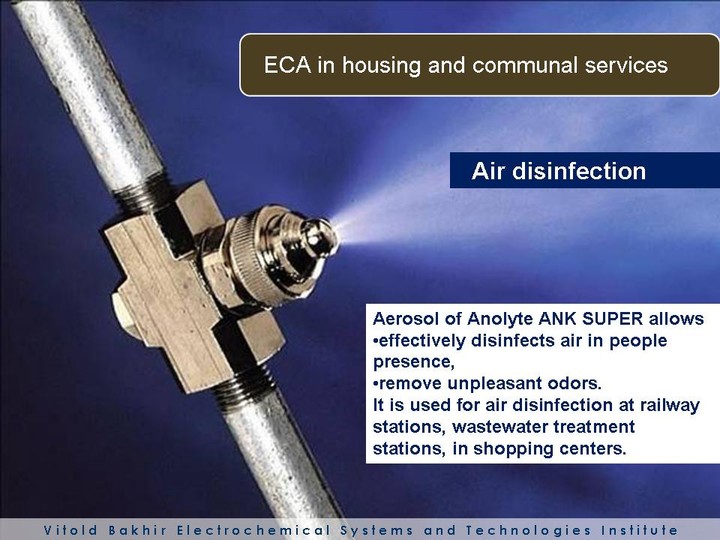
- Air disinfection by anolyte at presence of people at stations of wastewater disinfection;
- Disinfection of pipes, cisterns and other tanks of any volume for supply or/and storage of drinking water.
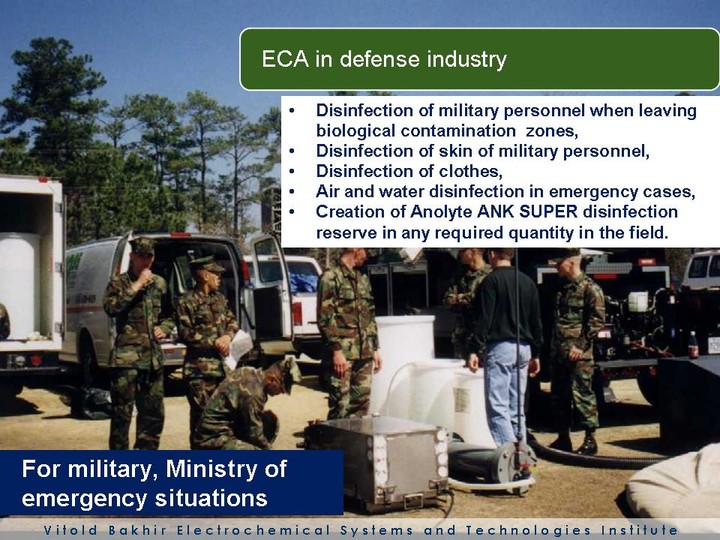
For Emergency Ministry and military personnel
- Production and use of anolyte in field conditions;
- Prodiving any settlement with the needed volume of anolyte due to placing of electrochemical STEL devices of various capacity at mobile cars - ambulance cars and special military cars;
- Making of disinfectants reserve of anolyte with the needed volume in a short period of time;
- Disinfection of skin and clothes of military personnel;
- Laundering and bleach of clothes;
- Conservation and keeping of remains of the dead. In contrast to formaldehyde solution anolyte does not damage DNA structure, but stop protein-degrading enzyme effect save possibility of the following genetic examination. It is used in practice of forensic medical examination of Ministry of Defense RF from 2000 year in accordance with approved methodic recommendations;
- Water disinfection in emergency cases;
- Air disinfection by anolyte aerosol;
- Transport disinfection;
- Disinfection of epidemiologically dangerous burial ground of cattle, etc.
Veterinary medicine
- Treatment and preventive measures of diseases: wound sanation of animals, watering of young animals (calfs, piglets, nestling) at infectious intestinal diseases and for its prophylaxis, etc.;
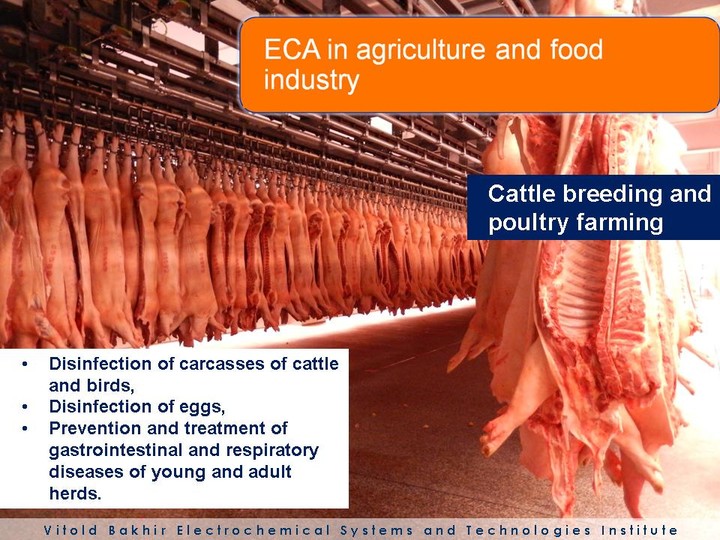
- Disinfection of incubatory eggs;
- Sanitary treatment of animals cover-let including cow udder, etc.;
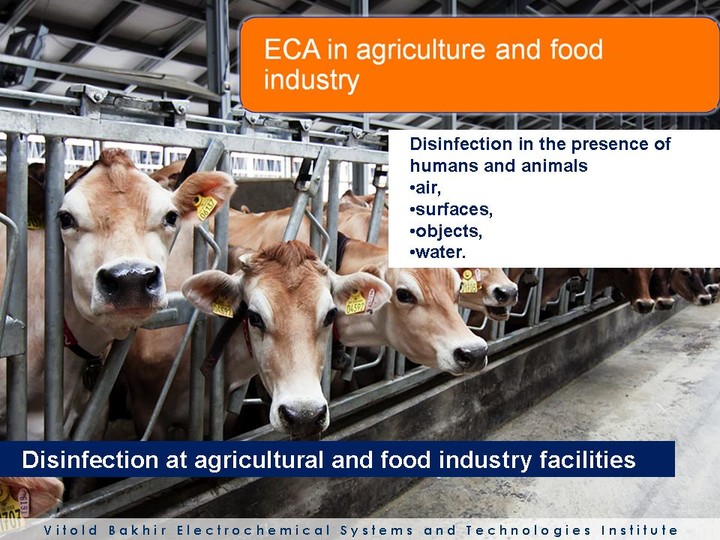
- Anolyte application by aerosol method for disinfection of cattle-breeding rooms at presence of people and animals;
- Water treatment and disinfection at growing of young fishes and shrimps.
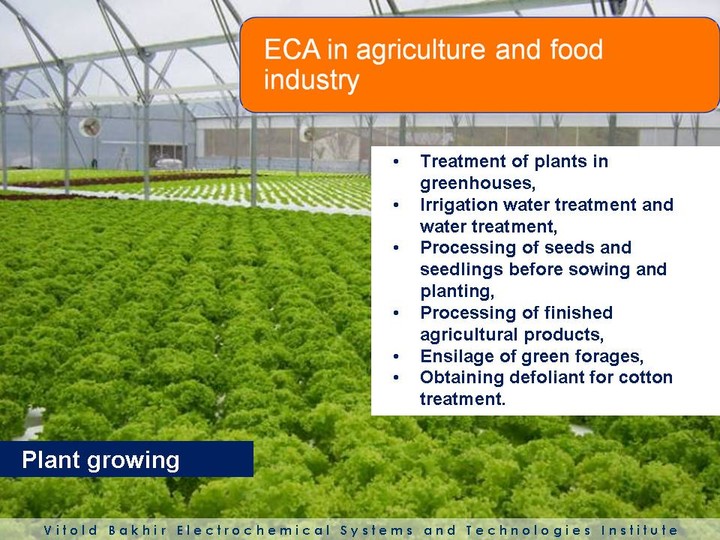
Agriculture
- Disinfection of cattle-breeding rooms and other agricultural places at presence of people and animals;
- Treatment of plants in greenhouses against bacteriosis and bug;
- Treatment of flushing water and general water treatment and disinfection;
- Disinfection of seed and seedlings before sowing and transplanting;
- Treatment of final agricultural products for purpose of its shelf life prolongation;
- Anolyte application in beekeeping (treatment and prophylaxis of bee diseases, immunity and productivity rise of bees);
- Ensilage of green fodder;
- Defoliant production for treatment of cotton-plant;
Food industry
- Straw saccharification;
- Treatment of food raw materials at food plants, for example at beet processing factories with the purpose of disinfection and shelf life prolongation;
- Disinfection of plant raw materials – salad, greens, vegetables, fruits and its shelf life prolongation;
- Disinfection of berries and fruits and its shelf life prolongation;
- Disinfection of carcasses of cattle and birds in slaughtering rooms and meat-processing plants;
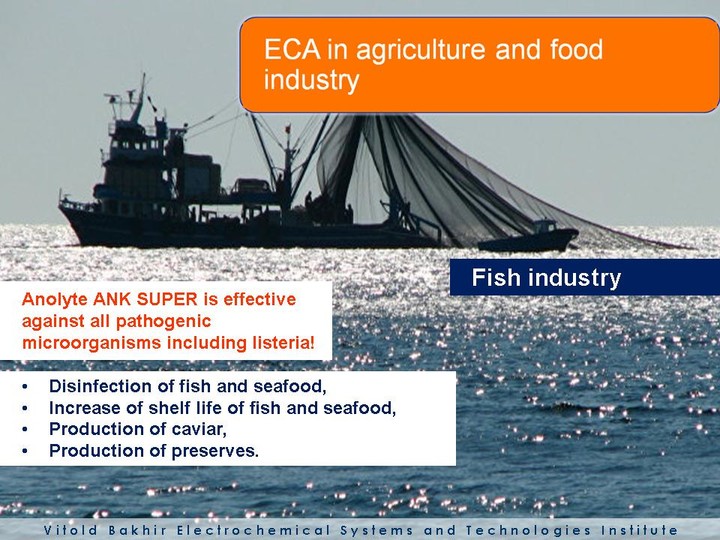
- Disinfection of fish and seafoods at efficacy against all pathogenic microorganisms including listeria;
- Anolyte use at fishing boat for shelf life prolongation of fish and seafoods;
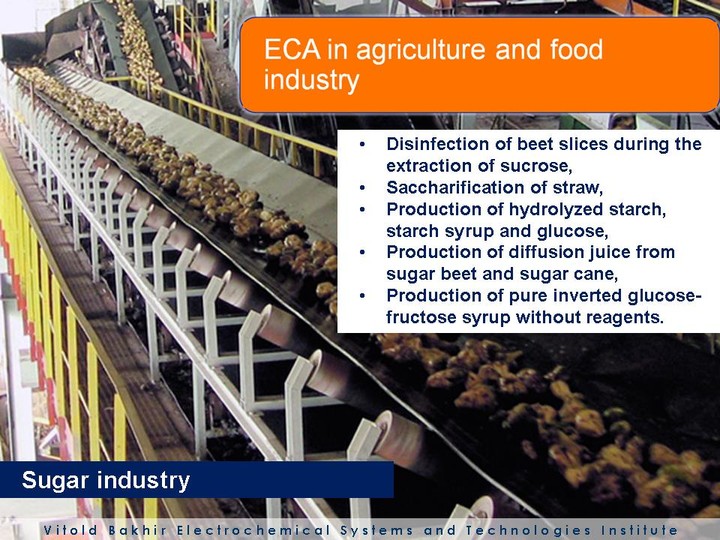
- Getting of ecologically pure inverted glucose-fructose syrup for confectionary industry and beverage foods industry;
- Disinfection of beet slices at sucrose extraction process;
- Getting of hydrolyzed starch, different types of starch syrup and glucose;
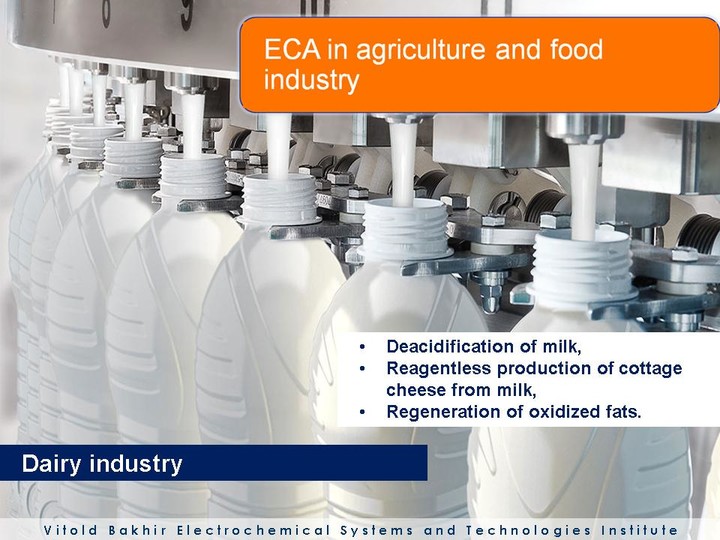
- Regeneration of oxidized fat;
- Reduction of milk acidity, reduction of acidity from 30 and more Terner degree till the norm of freshly dried milk;
- Getting of diffusion juice from sugar-beet and sugar-cane;
- Pectin getting from pomace;
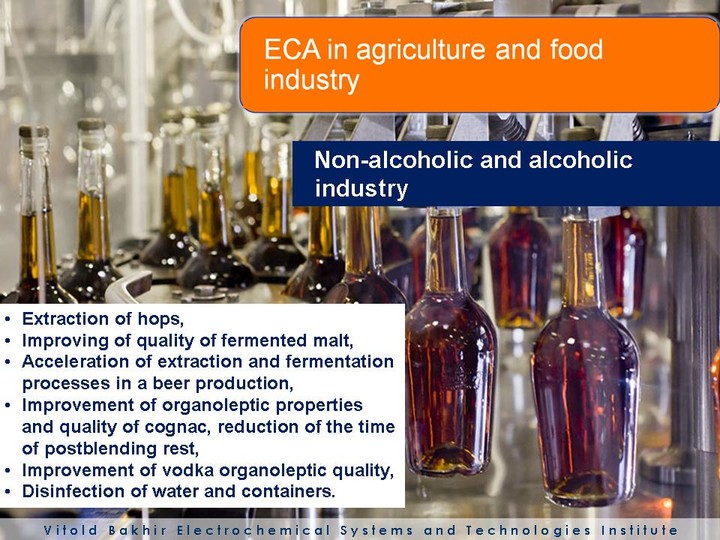
- Hop extraction with increase of isohumulon output;
- Quality improving of fermented malt and speeding-up of extraction and fermentation processes in brewing;
- Improving of quality and organoleptic evaluation of cognac, reduction of time of post-blending rest and increase of tank turnover in cognac production;
- Improving of quality of shelf life prolonging of preserves;
- Improving of quality of fish, meat, plant raw materials and shelf life prolonging of conserves;
- Cold pasteurization of fruit and berries and vegetable beverage, juices, fruit drinks and compotes;
- CIP-washing at all factories of beverage production under good epidemiological situation, improving of washing and disinfection quality at reduction of toxicity and increase of ecological compatibility.
Municipal economy
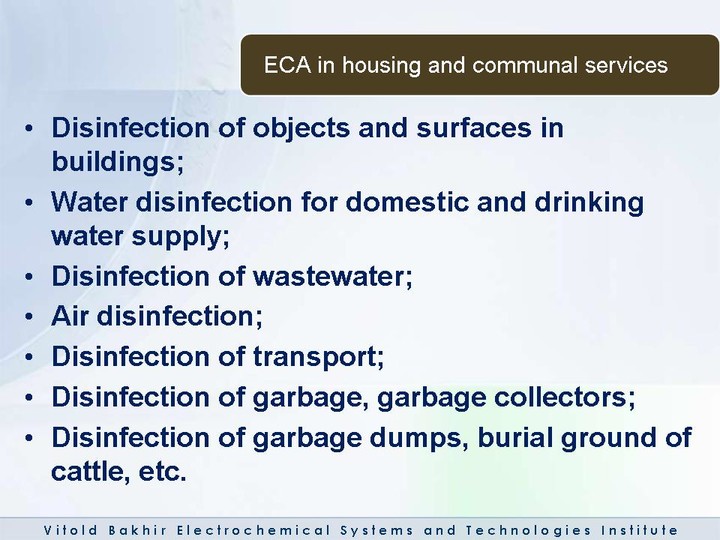
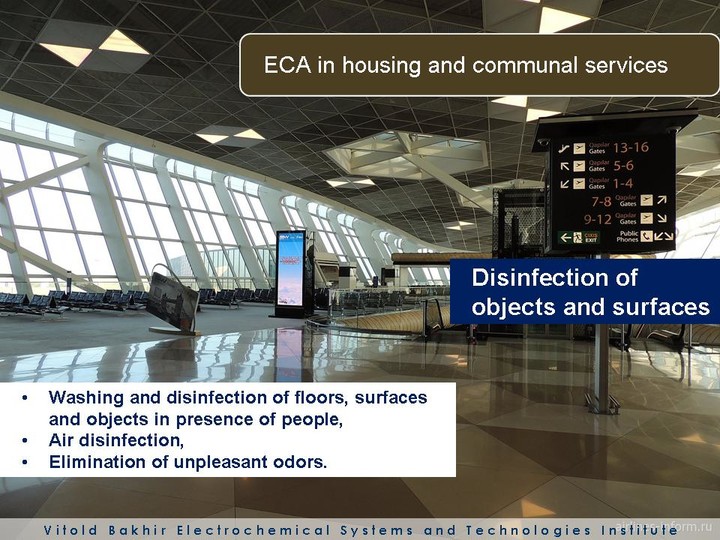
- Washing and disinfection of floors and surfaces at people presence;
- Disinfection of lavatories, sanitary equipment;
- Water disinfection of drinking water supply;
- Disinfection of wastewater including of waste water of infectious (tuberculosis) hospitals;
- Air disinfection by anolyte aerosol in rooms of any volume;
- Cleaning and disinfection of air-conditioners;
- Disinfection of ventilation stacks;
- Transport disinfection;
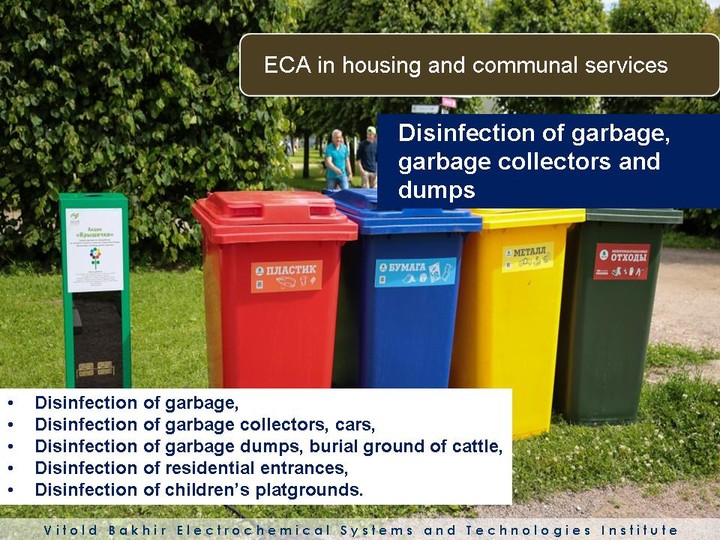
- Disinfection at liquidation of antrax burial grounds of cattle;
- Waste disinfection at dumps;
- Cleaning of entrances and stairs in houses;
- Disinfection of waste, refuse chutes, dustbins, refuse tippers;
- Disinfection of playgrounds;
- Disinfection of ground for building at places of earlier dumps and filter beds, etc.
Industry
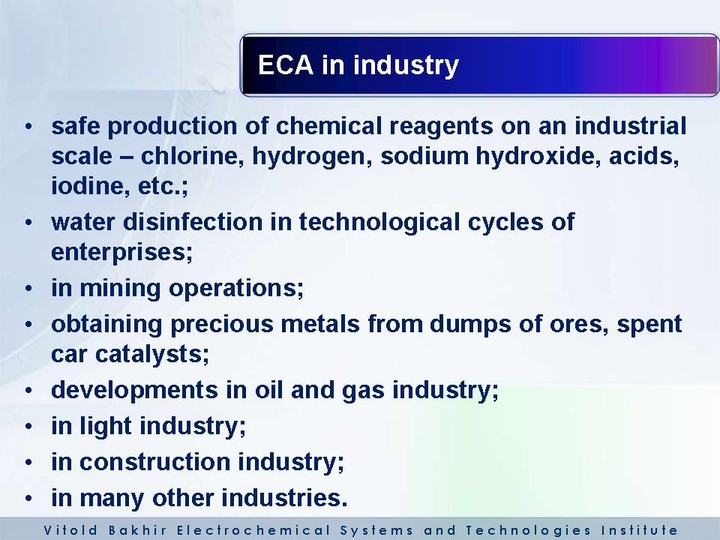
- Disinfection of water in technological cycles of industrial plants;
- Treatment of rubber medical products (plugs for bottles with pharmaceuticals) off mechanical pollution and removing water-soluble organic compounds, monomers from it.
- Improving of biocompatibility of polymers and rubber medical products by removing of monomer remains from methacrylic polymers.
- Application in technological cycles at pharmaceuticals production;
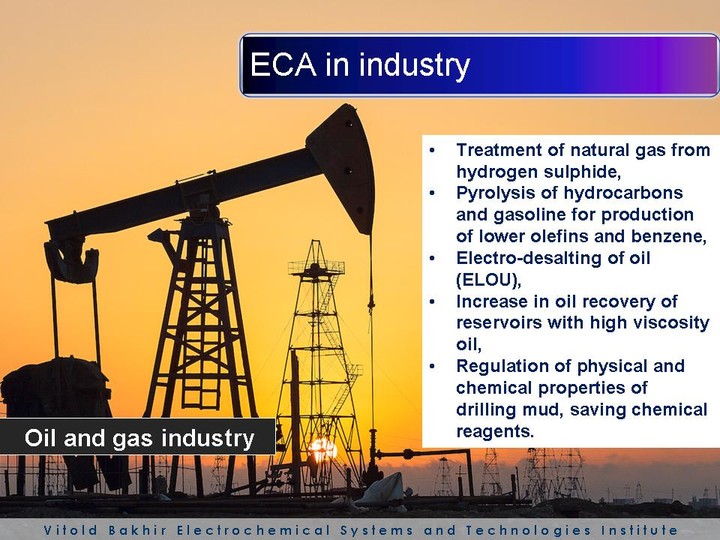
- Regulation of physical chemical properties of drilling;
- Well cementing, oil displacement from producing formation;
- Increase of high-viscosity oil extraction from producing formations;
- Treatment of natural gas off hydrogen sulphide;
- Pyrolysis of hydrocarbon and virgin petrol for production of lower olefins – ethylene, propylene, bivinyl, benzol;
- Oil electrical desalting;
- Gas treatment off sulfur-containing mixtures;
- Extraction of bivinyl-(methyl-) styrene caoutchoucs;
- Production of synthetic latex;
- Production of polyvinylchloride;
- Production of chloroprene rubber;
- Liming;
- Emulsion polymerization of bivinyl with styrene for getting of bivinyl-styrene caoutchoucs;
- Production of plastic and man-made fibers;
- Increase of adhesion strength of systems “rubber-metal”, “rubber-textile cord”;
- Dyeing of synthetic polymers in a mode of orientation exposure in absorption-active mediums;
- Formaldehyde solutions stabilization;
- Iodine production;
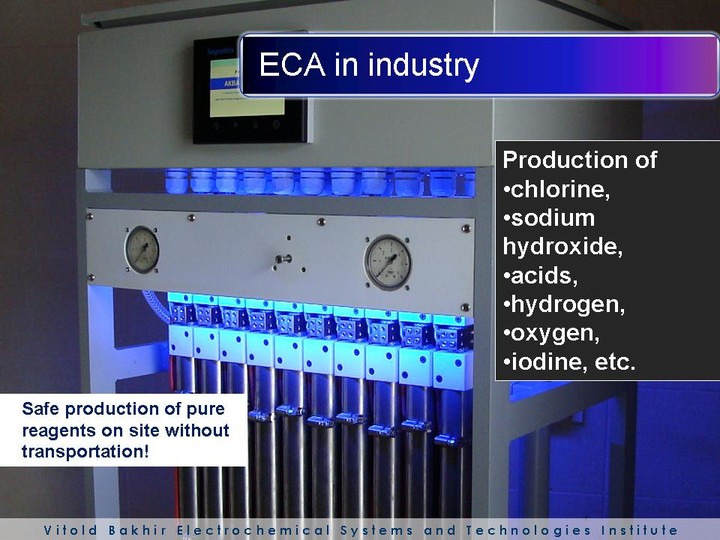
- Production of chlorine, hydrogen, oxygen, sodium hydroxide, peracetic acid, performic acid, sulphuric acid, hydrogen peroxide, ozon at places of use;
- Technology of getting film strips;
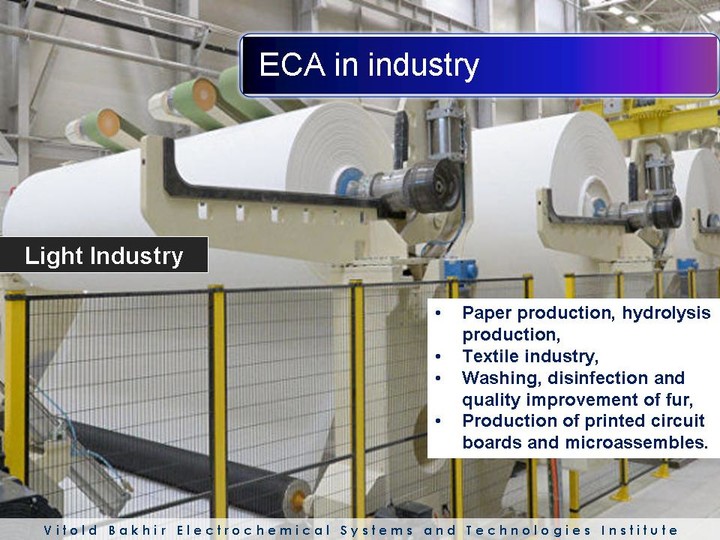
- Etching and treatment of circuit boards;
- Production of circuit boards and microassembly;
- Solutions for chemical metallization of dielectrics;
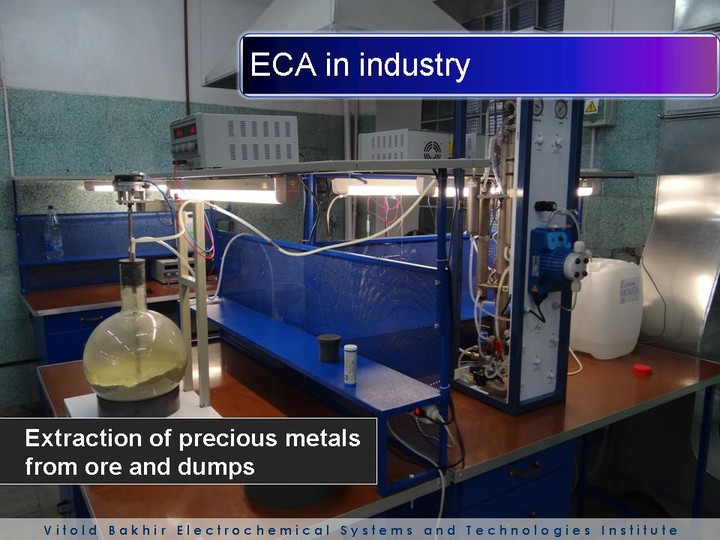
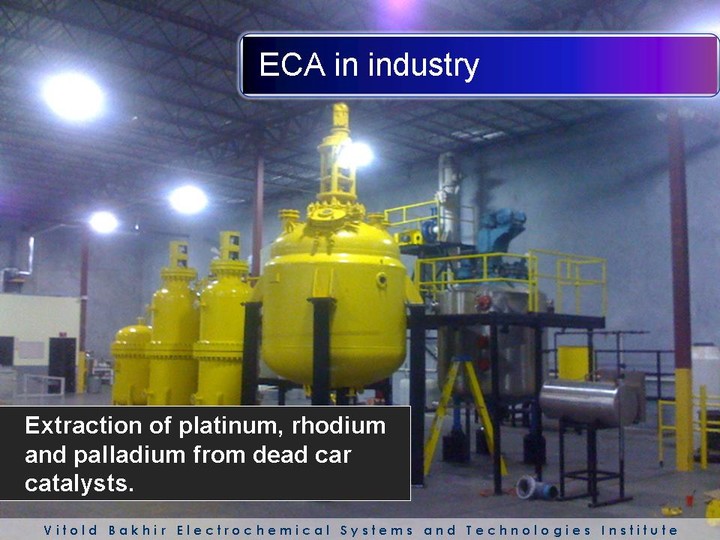
- Extraction of precious metals from car dead catalysts of afterburning exhaust;
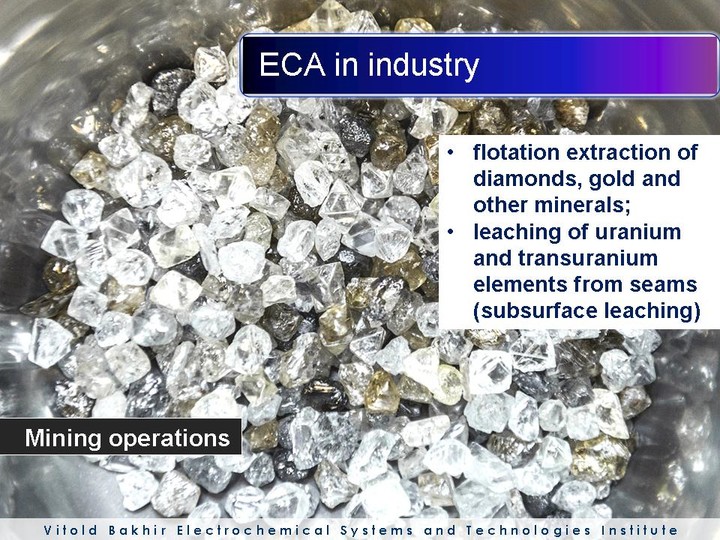
- Leaching of uranium and transuranium elements from beds;
- Flotation getting of diamonds, gold and other mineral wealth;
- Reduction of dead lead-acid accumulators;
- Paper production and hydrolytic manufacturing;
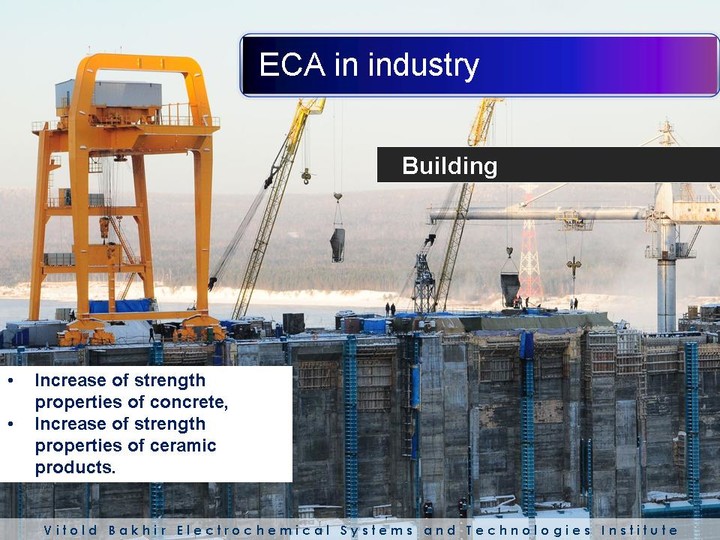
- Increase of strength properties of ceramic articles;
- Increase of strength properties of concrete;
- Washing and disinfection of tanning-fur raw materials;
- Improving of scalp of fur skin, increase of quality of dressed fur skin, reduction of time of fur skin dressing.
Transport
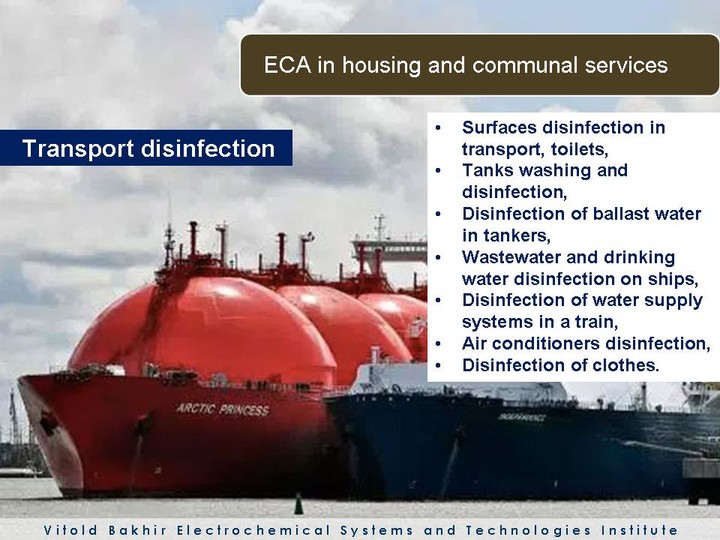
- Transport disinfection (surfaces, walls, seats, floor, lavatories, etc.);
- Disinfection of bed-clothes, towels;
- Disinfection of air-conditioners;
- Disinfection of water supply systems in train;
- Washing and disinfection of cisterns;
- Water disinfection in tankers: isolated ballast, clean ballast in tanks;
- Disinfection of residential waste waters and faecal waste waters, disinfection of drinking water at ships.
